You’ve probably seen Windows or Office licenses selling for a fraction of Microsoft’s list price and wondered: is this legal, or am I buying trouble? The honest answer is that it depends on where the license comes from. In the European Union there’s a landmark court ruling, UsedSoft v Oracle, that makes reselling genuine used software licenses legal under certain conditions. This guide explains what the ruling says, what it doesn’t, and how to buy safely.
Note: this article is general information, not legal advice.
Why Are Some Software Licenses So Cheap?
There are several legitimate reasons a license can cost less than the manufacturer’s retail price:
- Used (second-hand) licenses: businesses that switch to subscriptions or downsize may sell perpetual licenses they no longer need.
- OEM licenses: versions originally meant to be sold with new hardware, which are priced lower and tied to one device.
- Volume purchasing: resellers buy in bulk and pass on part of the margin.
- Lower overheads: online-only shops with digital delivery don’t have the costs of boxed retail.
There are also illegitimate sources: keys obtained with stolen credit cards, misused volume or education keys, or keys from regions where they are not allowed to be resold. The price alone doesn’t tell you which kind you’re getting, which is why the seller matters.
The UsedSoft Ruling (CJEU, Case C-128/11)
Background
UsedSoft, a German company, bought licenses for Oracle software from businesses that no longer needed them and resold them. Oracle argued that its licenses were non-transferable. The German Federal Court of Justice (BGH) referred the question to the Court of Justice of the European Union (CJEU).
The Decision (3 July 2012)
The CJEU ruled that the principle of exhaustion of the distribution right applies to software downloaded from the internet, not only to software on physical media. In simple terms: once the copyright holder has sold a perpetual license for a copy of its software in the EU, it can no longer prevent that copy from being resold, even if the license agreement says it is non-transferable.
Key Conditions
- The license was originally sold in the EU/EEA by or with the consent of the rights holder.
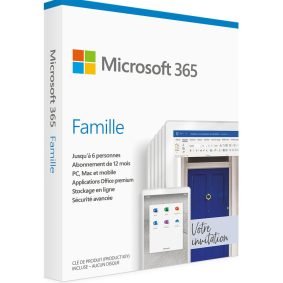
- It was granted for an unlimited period (a perpetual license) in exchange for a one-off fee. Subscriptions like Microsoft 365 are not covered.
- The original owner must make their copy unusable at the time of resale (uninstall it and stop using it).
- A volume license bundle can’t simply be split up in a way that goes beyond the use originally acquired. The court addressed this specifically for client-server licenses.
What Happened Next
The case went back to the German BGH, which applied the CJEU’s principles in later decisions (often referred to as UsedSoft II and UsedSoft III). German courts have since generally recognized the legality of trading in used software licenses when the conditions are met and the chain of ownership can be shown.
What the Ruling Does NOT Cover
- Subscriptions (Microsoft 365, Adobe Creative Cloud): these are rentals, not perpetual sales.
- Other digital content such as e-books: in Tom Kabinet (C-263/18, 2019) the CJEU held that reselling e-books is a communication to the public, not covered by exhaustion. UsedSoft is specific to computer programs under the Software Directive.
- Licenses sold outside the EU/EEA: exhaustion under EU law relies on the first sale happening in the EU/EEA.
- Stolen or fraudulent keys: no ruling makes these legal.
What About Buyers Outside the EU?
Rules differ by country. In the United States, for example, courts have treated some software licenses differently from sales (see Vernor v. Autodesk, 2010), so the EU principle doesn’t automatically apply. If you’re outside Europe, check your local law, and in every case buy from a reseller who can document where its licenses come from.
Is Using an OEM Key Legal?
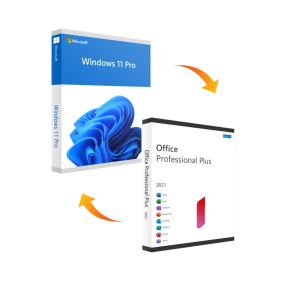
OEM licenses are genuine Microsoft licenses. Their terms tie them to a single device. Within the EU, the resale of such licenses has also been discussed in light of the exhaustion principle. Practically, an OEM key activates Windows normally but generally can’t be moved to a new PC. If flexibility matters, choose a Retail license, for example Windows 11 Pro Retail instead of OEM.
How to Spot a Legitimate Software Reseller
Green Flags
- Documented license origin and the ability to provide reseller certificates or proof of purchase on request.
- A real company identity: business address, contact details and clear terms of service.
- A clear refund and replacement policy if a key doesn’t activate.
- An invoice for every purchase.
- Responsive customer support and activation guides.
Red Flags
- Prices that are unrealistically low, even for used licenses.
- Selling Microsoft 365 or other subscriptions as “lifetime keys”.
- No company details, no invoice, payment only by crypto or gift cards.
- Requests to activate by phone with strange instructions, or “keys” that stop working after a few weeks.
How Cronx Handles This
Cronx sells software licenses and holds reseller certificates for the products it offers. Every order comes with email delivery, activation instructions and support if something goes wrong. Read more about us, our refund policy and our terms of service.
FAQ
Is it legal to buy a used Windows or Office license in the EU?
Generally yes, if it’s a perpetual license first sold in the EU/EEA and the previous owner no longer uses it, as established in UsedSoft (C-128/11).
Can Microsoft deactivate a used license?
A genuine, properly transferred license should activate and stay activated. Problems usually arise with fraudulently obtained or misused keys, which is why the source matters.
Is Microsoft 365 covered by UsedSoft?
No. Microsoft 365 is a subscription, not a perpetual license, so the exhaustion principle doesn’t apply.
Do I get an invoice?
You should always get one from a legitimate reseller. Contact Cronx support if you need an invoice for your order.
What if my key doesn’t work?
Follow our activation guide first. If it still fails, a trustworthy seller will replace the key or refund you under its refund policy.
Looking for a license? Browse Windows, Office and Windows Server licenses.